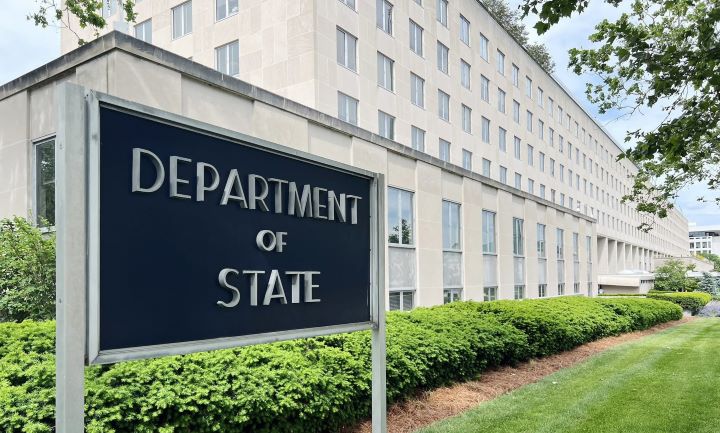
Georgetown. The United States Department of State has announced that Deputy Secretary of State Christopher Landau will travel to Trinidad and Tobago and Guyana from August 9 through 12, 2026, in the latest sign of Washington’s growing focus on the southern Caribbean.
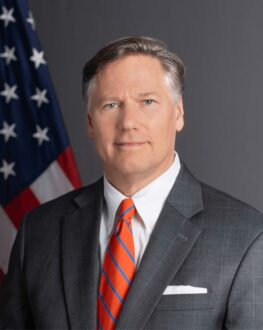
According to the Office of the Spokesperson, Deputy Secretary Landau will first stop in Trinidad and Tobago, where he is scheduled to meet Prime Minister Kamla Persad Bissessar to strengthen the bilateral relationship, including shared energy and security priorities and expanded economic cooperation. From there he will travel to Guyana to meet President Irfaan Ali and members of Cabinet, with talks focused on expanding bilateral economic cooperation, strengthening investment opportunities, and enhancing collaboration in strategic sectors including energy and critical minerals.
The State Department framed the trip as evidence of a broader commitment. Officials said the visit underscores the United States’ intent to strengthen partnerships across the hemisphere and to advance shared priorities such as regional security, energy resilience, and economic prosperity.
A Visit That Fits a Larger Pattern
This trip does not stand alone. It follows a string of high level American engagements with Guyana over the past year, including a December visit by senior Department of War officials who signed a Statement of Intent to expand military cooperation, and, only days before Landau’s arrival, an announcement by the Department of War of an $85.5 million investment in Guyana’s bauxite sector to secure critical minerals for national defense. Add to that Guyana’s participation in the Americas Counter Cartel Joint Security Declaration and continuing joint exercises between the Guyana Defence Force and United States Southern Command, and a clear pattern emerges. Washington is treating Guyana, and the wider southern Caribbean, as a priority rather than an afterthought.
The timing matters. The visit comes against a backdrop of heightened regional tension involving Venezuela, whose government continues to press its long standing claim over Guyana’s Essequibo region and has adopted an increasingly assertive military posture along the border. American officials have repeatedly framed their engagement with Guyana in terms of supporting the country’s sovereignty and territorial integrity, and this visit is likely to be read, in Georgetown and in Caracas alike, as a continuation of that message.
What the United States Stands to Gain
For Washington, the benefits of this kind of high level engagement are straightforward. Guyana offers a rapidly growing offshore oil sector, expanding mineral resources now tied directly to American defense supply chains, and a government that has shown consistent willingness to deepen security and economic cooperation. By sending a deputy secretary rather than a lower ranking official, the State Department signals that Guyana and Trinidad and Tobago are viewed as significant partners, not routine stops.
There is also a geopolitical dimension. Strengthening ties with Guyana and Trinidad and Tobago allows the United States to counterbalance Chinese economic engagement in the region and to present a united front with regional partners at a moment when Venezuela’s posture is unsettling the southern Caribbean. Energy resilience is another driver. Trinidad and Tobago’s natural gas sector and Guyana’s oil and mineral wealth both matter to American energy and industrial planning.
What Guyana Stands to Gain, and What It Should Watch For

For Guyana, a visit of this profile carries real potential benefits. It offers another opportunity to advance discussions on investment, trade, and security that could translate into jobs, infrastructure, and expanded market access for Guyanese goods and services. It also reinforces the diplomatic backing that Guyana has sought as it manages its dispute with Venezuela, at a time when international support carries real weight.
At the same time, Guyanese citizens and policymakers should approach these engagements with clear eyed pragmatism rather than simple celebration. Deepening reliance on any single foreign partner, however powerful and well intentioned, carries risk. Guyana’s economy and security posture benefit most when the country can engage confidently with multiple partners, including the United States, the United Kingdom, the European Union, CARICOM neighbors, and others, without becoming overly dependent on one. Citizens deserve clarity on what specific commitments, if any, emerge from these meetings regarding investment terms, local job creation, technology transfer, and the extent of any expanded security cooperation, including whether it involves an increased American military footprint.
The Regional Angle: Trinidad and Tobago
Pairing this visit with Trinidad and Tobago is not incidental. Port of Spain has emerged as another close Washington partner in the region, with recent engagements touching on energy security, counter narcotics cooperation, and support for stabilizing Haiti. A joint itinerary suggests the United States is pursuing a coordinated southern Caribbean strategy rather than a series of disconnected bilateral relationships, which could strengthen CARICOM members’ collective leverage if they choose to coordinate their own responses and requests.
Implications for Ordinary Citizens
For the average Guyanese or Trinidadian citizen, a cabinet level visit and a press release can feel distant from daily concerns such as the cost of living, employment, and public services. The real test of this visit’s value will be whether the discussions produce tangible outcomes: new investment that creates jobs, expanded trade that benefits local businesses, and security cooperation that genuinely improves safety without compromising national decision making.
For American citizens, sustained diplomatic and economic engagement in the Caribbean represents an investment of attention and resources justified by energy security, critical mineral access, and regional stability, all of which carry indirect benefits at home, from steadier energy markets to reduced dependence on strategic competitors for essential materials.
A Relationship Still Being Defined
Deputy Secretary Landau’s trip is best understood as another chapter in a rapidly evolving relationship rather than a single defining event. The direction is clear. The United States is investing diplomatic capital, security cooperation, and now direct financial resources in Guyana and its immediate neighborhood. What remains to be defined, and what Guyanese citizens have every right to ask their government to define clearly, is the precise balance of benefits and obligations this deepening partnership will bring, and whether the terms being negotiated in Georgetown this week will serve Guyana’s long term development as much as they serve Washington’s strategic interests.
Source: United States Department of State, Office of the Spokesperson, press release, August 2026.