GEORGETOWN, Guyana, July 24, 2026. The arrest of three of five women protesters, Salima Bacchus-Hinds, Romola Lucas, and Sherlina Nageer, who attended the government-organized vigil for victims of the MV Barima tragedy has ignited renewed debate over freedom of peaceful assembly, constitutional rights, and the role of law enforcement in Guyana.
The five women protesters, Salima Bacchus-Hinds, Susan Collymore, Romola Lucas, Joy Marcus, and Sherlina Nageer, issued a joint public statement describing the circumstances surrounding their detention during the July 22 vigil at the Kingston Seawall.
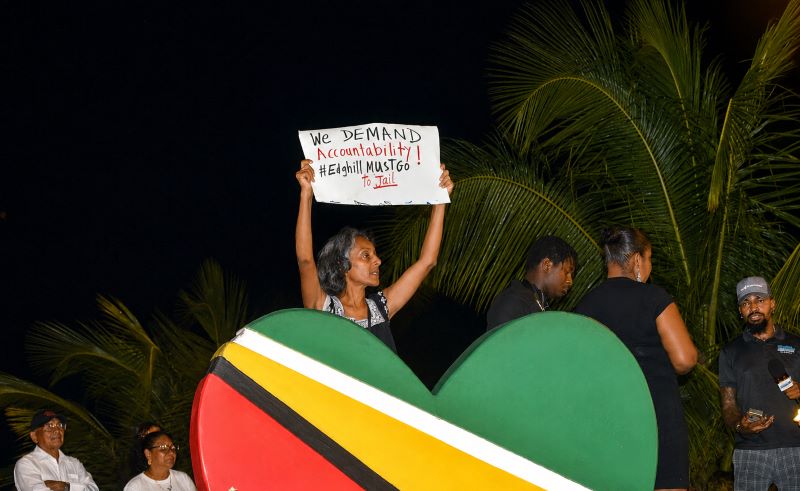
According to the statement, the group attended the vigil to express solidarity with the families of those who lost loved ones in the sinking of the MV Barima while also calling for greater accountability over what they describe as a preventable national tragedy. They carried placards demanding the resignation and prosecution of Minister of Public Works Juan Edghill, whose ministry has responsibility for transport and infrastructure.
The women said they deliberately positioned themselves on the periphery of the event and remained silent throughout the proceedings. They maintain they did not interrupt prayers, speeches, songs, or other activities associated with the vigil and did not obstruct attendees or interfere with the event.
According to their account, police officers later instructed them to move from their location. The women stated that they questioned what law they were allegedly violating and were not given a clear explanation. They said they subsequently attempted to relocate away from the main gathering but were informed that they would be arrested for what officers described as an “unlawful protest.” They further alleged that one member of the group, Sherlina Nageer, was forcibly taken into custody before the others were arrested and transported to the Brickdam Police Station within the Eve Leary compound.
The women stated that police informed them they had not obtained permission to protest and that the placards they carried were “illegal signs.” They were later released on their own recognizance and instructed to return the following day.
In their statement, the group cited Article 147 of the Constitution of Guyana, which protects the rights of citizens to assemble, associate, and demonstrate peacefully. They contend that their arrest represented an infringement of those constitutional protections and described the incident as an abuse of state authority.
The women also disclosed that the police subsequently withdrew all charges and offered an apology. Despite that development, they announced their intention to file a formal complaint with the Office of Professional Responsibility and pursue additional legal and administrative remedies aimed at preventing similar incidents involving peaceful demonstrators in the future.
Beyond the circumstances of their arrest, the group renewed calls for an independent and transparent investigation into the MV Barima disaster, accountability for any officials found responsible, and comprehensive reforms to Guyana’s public transportation system. They argued that improvements are needed to ensure the safety, accessibility, and dignity of those who rely on ferry transportation, particularly residents of the hinterland who often have limited alternatives.
The incident has become part of a broader national discussion about the balance between public order and constitutional freedoms. It also comes at a time when many Guyanese continue to demand answers about the circumstances surrounding the MV Barima tragedy and whether systemic failures contributed to the loss of life.
As of publication, authorities have not released a detailed public legal explanation regarding the basis for the arrests beyond the allegations referenced in the women’s statement.