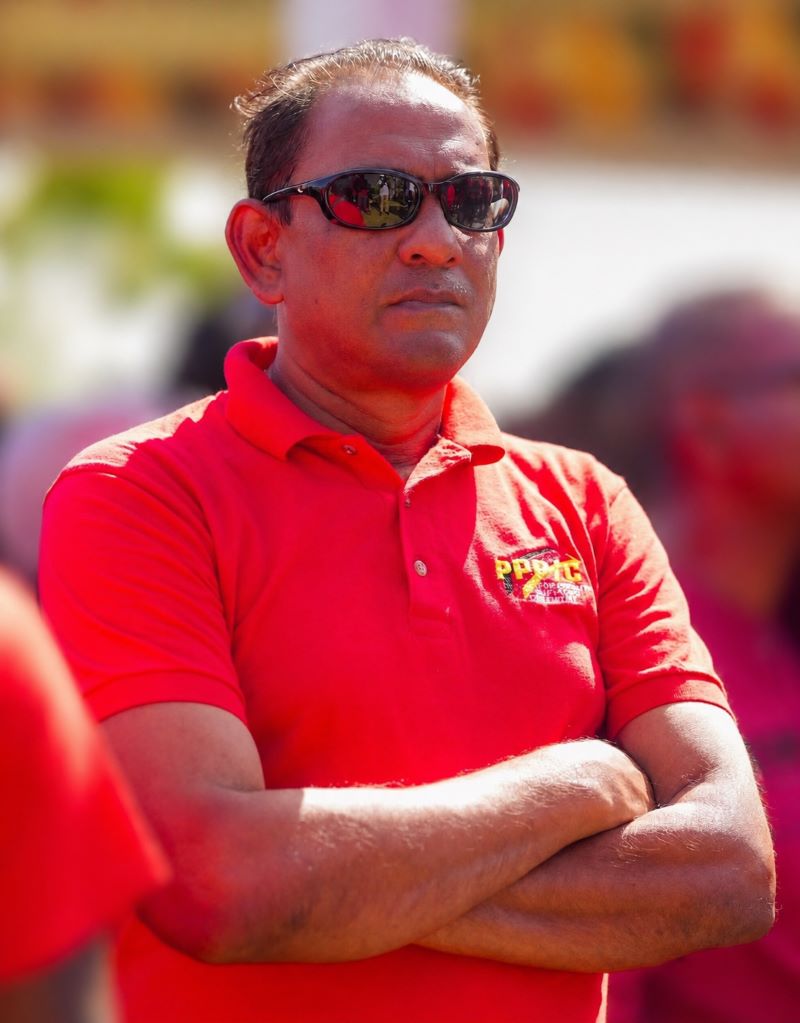
News of the death of Guyanese social media personality Don Singh, reportedly following what has been described as a brain aneurysm, has sparked a wide range of reactions across Guyana and within the diaspora. While many have expressed condolences to his family and loved ones, others have reacted with little sympathy, pointing instead to the years of inflammatory political commentary that made him one of the country’s most divisive online figures.
The contrasting reactions to his passing raise uncomfortable questions about political discourse, personal responsibility, and the legacy each of us leaves behind.
Don Singh became well known on Facebook for his unwavering support of the People’s Progressive Party (PPP) government. Political support, in itself, is neither unusual nor objectionable. Democracy depends on citizens advocating for the parties and policies they believe will best serve their country.
What drew widespread criticism, however, was not his political allegiance but the manner in which he often expressed it.
His online commentary frequently descended into personal attacks, racial insults, and abusive language directed at political opponents and those who simply disagreed with his views. Rather than engaging in debate over ideas and policies, many believed he contributed to a political environment where hatred replaced dialogue and where opponents were portrayed as enemies rather than fellow Guyanese.
Social media has given everyone a microphone. Unfortunately, it has also rewarded outrage. The more inflammatory the statement, the greater the attention it often receives. Many users become trapped in a cycle where applause from like minded supporters reinforces increasingly hostile behavior.
The result is a public square that becomes more divided with every passing day.
Those celebrating Don Singh’s death should pause before doing so. Death is a deeply personal tragedy for every family. Whatever a person’s public conduct may have been, their loved ones still grieve the loss of a father, brother, husband, relative, or friend. Compassion toward those left behind reflects our own humanity.
At the same time, those expressing outrage over the negative reactions should also recognize why many people feel the way they do. Public figures, whether elected officials, activists, journalists, or social media personalities, build reputations through their words and actions. The reactions that follow their passing often reflect the relationships they cultivated during their lives.
A person’s legacy is not written on the day they die. It is written every day they live.
Guyana has endured decades of political division, ethnic mistrust, and social polarization. Far too often, public discourse has rewarded those who insult the loudest rather than those who reason the best. Every political party has supporters who contribute to this toxic environment. None has a monopoly on civility, and none has a monopoly on abuse.
As Guyana experiences unprecedented economic growth, its greatest challenge may not be managing its oil wealth but learning how to disagree without dehumanizing one another.
We are all traveling toward the same destination. None of us will leave this life alive. The only uncertainty is when our journey ends and what people will remember when it does.
Perhaps Don Singh’s passing should serve as a reminder to all of us that political victories are temporary, online applause quickly fades, and harsh words often outlive the people who speak them.
If there is one lesson worth taking from this moment, it is that convictions should never require cruelty. Strong opinions can be expressed without hatred. Fierce political disagreement does not require personal destruction.
In the end, every one of us leaves behind a reputation built one conversation, one action, and one word at a time. That is the legacy our families inherit, and the one history ultimately remembers.
May his soul rest in peace and may God have mercy on us all.